
Burns and Scalds
There are real risks of burns and scalds in every home, especially from hot water and food. They often happen when an adult is present - from tamariki washing their hands under a tap that is too hot, to an accidental tipping of a coffee cup. Pēpē and young tamariki are especially at risk because they're small, inquisitive, and their skin is a lot thinner than an adult so burns quicker and deeper.
Preventing Burns in the whare
How to keep tamariki aged 0-4 safe from burns
Hot drinks and food
Put hot drinks in the middle of the table, out of reach of tamariki.
Avoid using tablecloths and only use small placemats.
Put baby down when drinking a hot drink or cooking
Place tamariki in a safe place out of the kitchen while cooking.
Have a tea break when they're sleeping.
Formula and Breast Milk
Avoid using microwaves to reheat bottles of breast milk or formula. Microwaves can heat unevenly and create hot spots that can burn pēpi.
The best way to warm bottles is to stand them in warm water from the kitchen tap.
Boiling water should not be used to warm milk.
Place the container with warm water in a safe place, like the sink, out of reach of other tamariki.
Check the temperature of milk by testing on your wrist, if you can’t feel it or it’s lukewarm, then it is ready for pēpi.
Hot water
Set your hot tap water to between 50 - 55oC.
When filling the bath or sink, turn on the cold water first and turn it off last.
Check your tamariki's bath water with your wrist or elbow before they get in.
Hot water bottles
Young tamariki and those with decreased sensation are at greater risk of suffering serious burns from hot water bottles. So, it’s safer not to let young tamariki use hot water bottles.
What to look for in a hot water bottle
Check the safety standard marking on your hot water bottle. All new hot water bottles available for sale should only have BS 1970:2012 marked on the neck.
If you can, think about replacing your hot water bottle every 12 months to be safer. You can check the daisy wheel on your hot water bottle to see the date it was manufactured.
Choose a hot water bottle with a large opening if possible, to make filling safer.
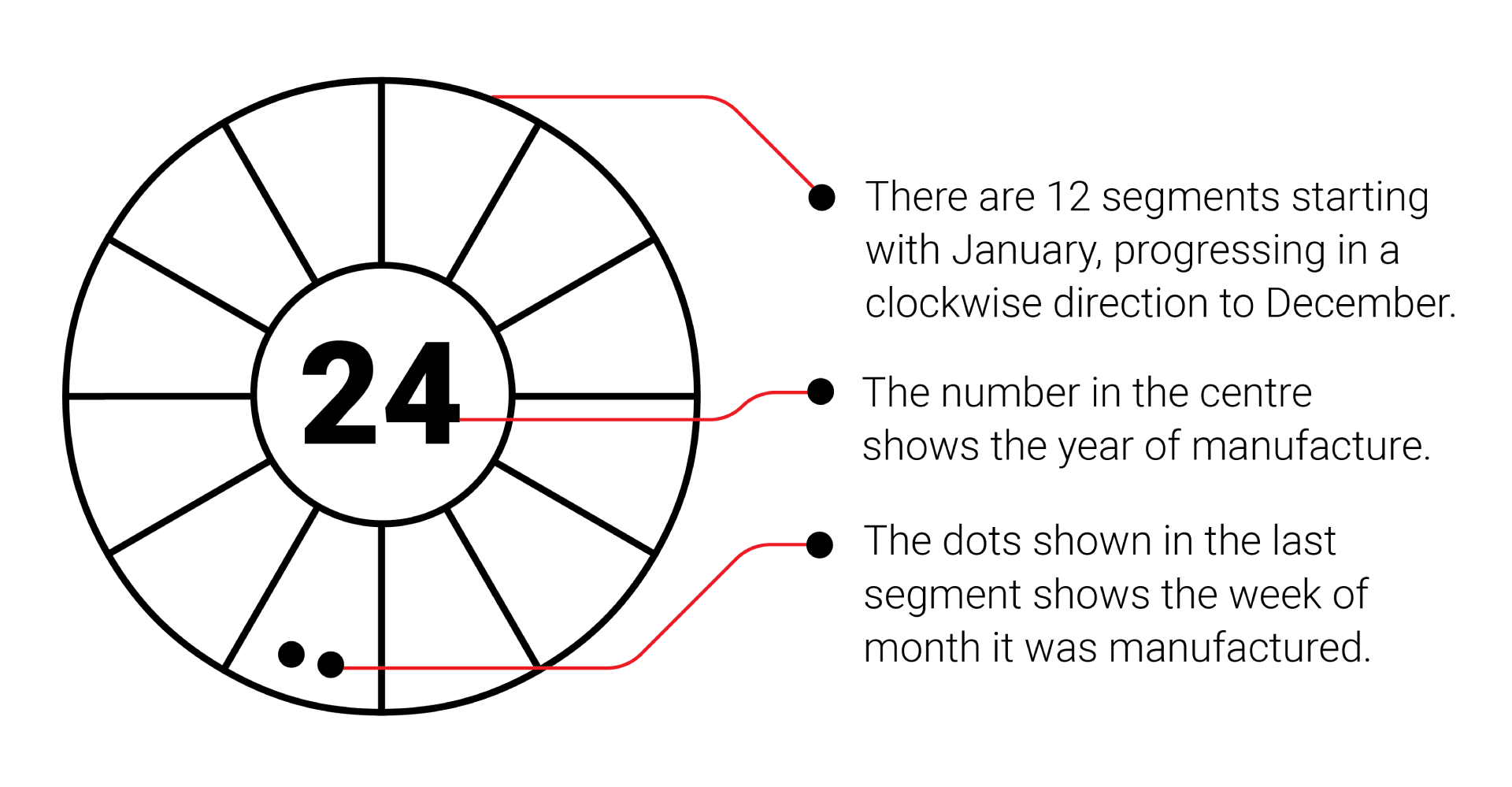
This example was manufactured in the second week of July 2024.
How to safely fill a hot water bottle
It’s safest to keep hot water bottles away from tamariki, and to only fill them up when tamariki are not around you.
We’re used to filling hot water bottles up straight from the jug, but using boiling water can cause the bottle to split or leak. Instead, use hot water from the tap to fill hot water bottles up, and only fill 2/3rds of the way. Pour slowly to avoid any splashes.
Check the plug is properly sealed and not leaking.
How to safely use a hot water bottle
Use a cover or wrap a towel around the hot water bottle. It is dangerous to use in direct contact with skin.
Old hot water bottles can leak and split, so check for damage before use. If you can, think about replacing your hot water bottle every 12 months to be safer.
For children (and the elderly), use the hot water bottle to warm the bed, then remove before they get into bed.
For older tamariki using hot water bottles, ensure they know to never lie or sit on a hot water bottle.
Cooking and Kitchens
Before you cook, organise your tamariki with activities somewhere safe.
Be aware that hot oven doors, stove tops, toaster and kettles also cause burns to tamariki, so it's best to keep young tamariki out of the kitchen.
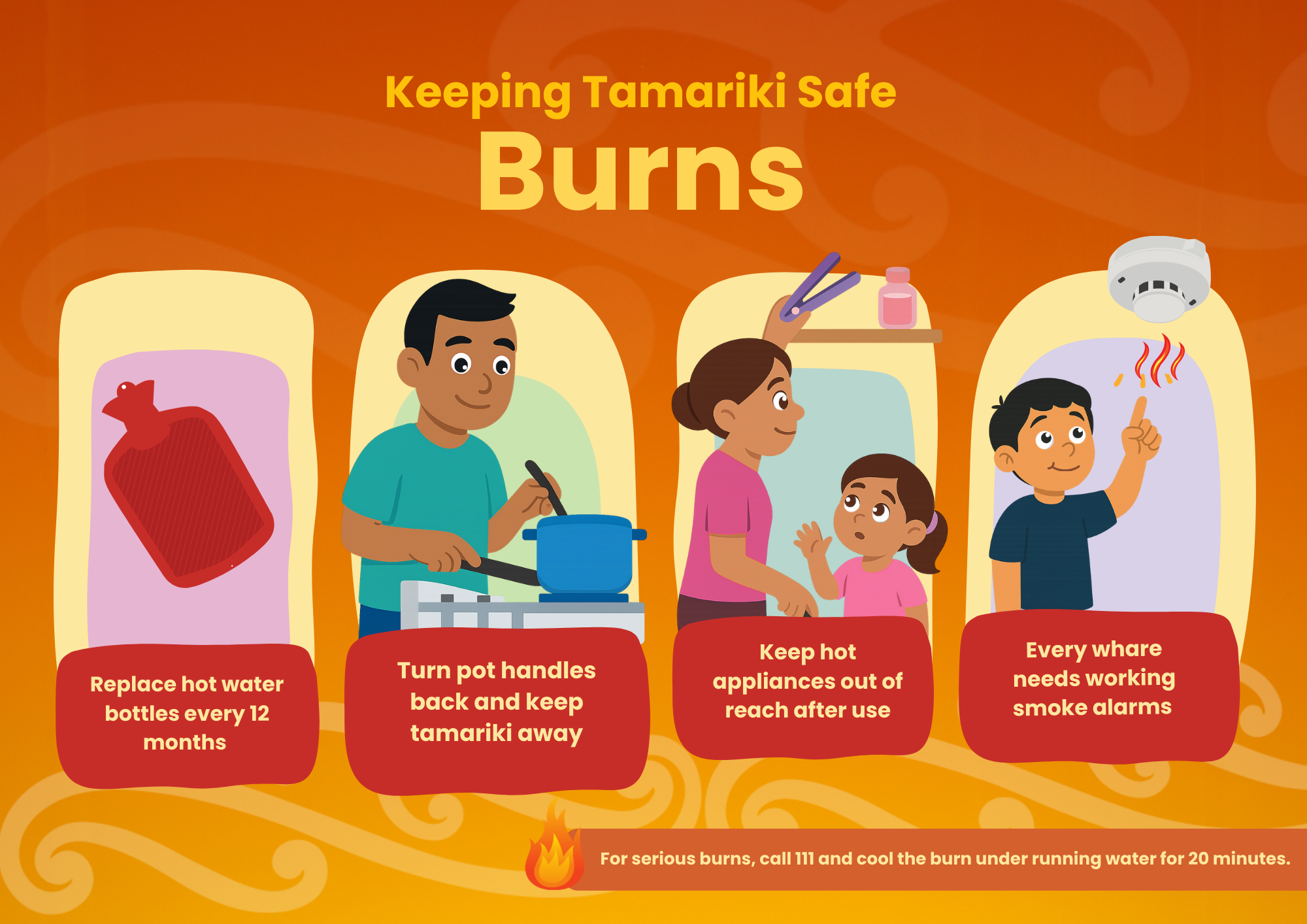
Turn pot handles towards the back and block access to the stove.
Keep hot food and drinks away from the edge of the kitchen counter.
Include older rangatahi in cooking to teach them how to cook safely.
Fires
Every house should have a working smoke alarm on every level and in each bedroom, living area and hallway; ideally long-life photoelectric ones. Check smoke alarm monthly and check the expiry date.
Lock away matches and lighters; out of sight and reach of tamariki.
Use protective screens to stop children getting too close to the fireplace. And ensure tamariki, clothes etc are at least 1m from the heat source.
When choosing pyjamas, look for the white label for lower fire hazard risk.
Choose snug-fitting clothes as they have less air underneath to feed flames.
If buying second hand pyjamas, check that it still has the safety label tag.
Appliances
Place hot appliances like hair straighteners and irons out of reach after use.
Put safety covers on all electrical outlets.
Arrange furniture so that children play well away from heaters. Keep at least one metre from the heater.
First Aid
Preventing burns is the best way to keep your tamariki safe. But if a burn happens
If your child has a serious burn or scald that is causing a lot of pain or involves their eyes, call 111 immediately.
If in doubt, call Healthline on 0800 611 116 for free medical advice 24/7.
Start cooling the burn as soon as possible.
Run cool water from a tap or shower over the burn for up to 20 minutes or until an ambulance arrives. Use lukewarm water for babies as they can develop hypothermia (they can become too cold).
To prevent the burn from getting infected, cover it loosely with a clean, non-fluffy material such as a sheet or plastic wrap. Do not cover your child's face even if that's where the burn is.
If the burn causes ongoing pain or involves the eyes, see your doctor as soon as possible.
Supporting your child after a burn injury
A burn injury can affect more than your child’s skin. It can also affect how they feel about themselves and how they interact with others. Children may react differently depending on their age and stage of development and it’s important to provide ongoing support for these injuries.
Make space to kōrero. Let your child share how they feel. Listen, reassure them, and let them know that they are not alone.
Build their confidence. Children may feel self-conscious about scars. Help them practice simple ways to respond to others who might ask them questions or stare because of their injury.
Help them feel connected. Spending time with other children who have had similar experiences can help your child feel understood
Camp Awhi – Burns Support Group Charitable Trust
Camp Awhi is a 5 day National Children’s Burn camp, designed to create life-changing experience for young burn survivors across New Zealand. For more information click here
Support them as they grow. Young children and teens may experience their burn differently. Keep checking in and offering support over time.
Download our Burns Safety Guide
Other helpful resources
Burns Support Group Charitable Trust
ANZBA Prevention Factsheets
Supporting Kids After a Burn Injury
References:
1. Photo: Australian Competition & Consumer Commission (n.d.). Hot water bottles guide. Product Safety Australia. Retrieved August 26, 2025, from https://www.productsafety.gov.au/consumers/be-safe-around-the-home/use-products-inside-the-home-safely/hot-water-bottles-guide