Toy Safety Week 2026
Check toys for safer adventures
This Toy Safety Week, we're encouraging whānau to think about how their children play and whether their toys are safe for their age and stage of development.
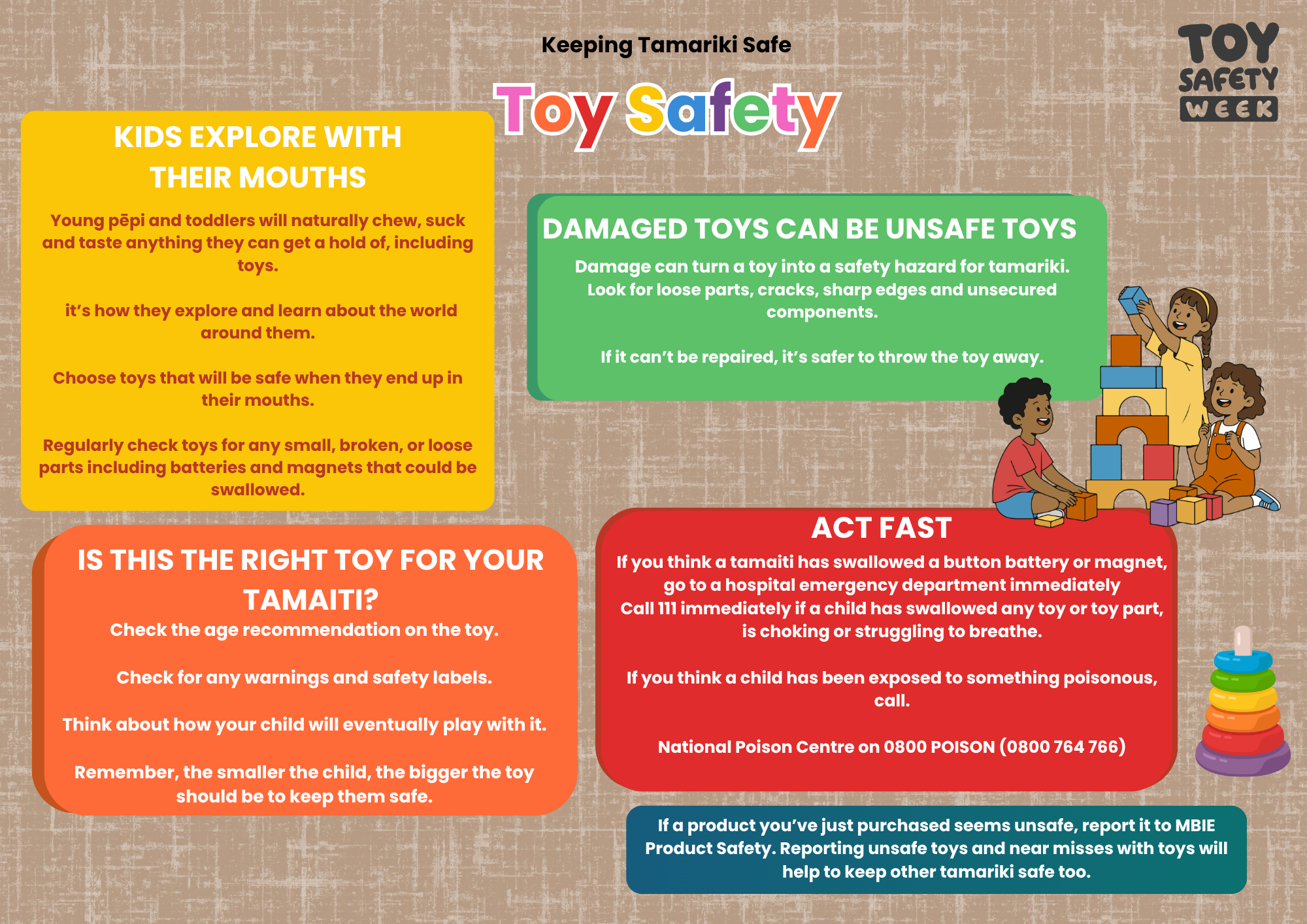
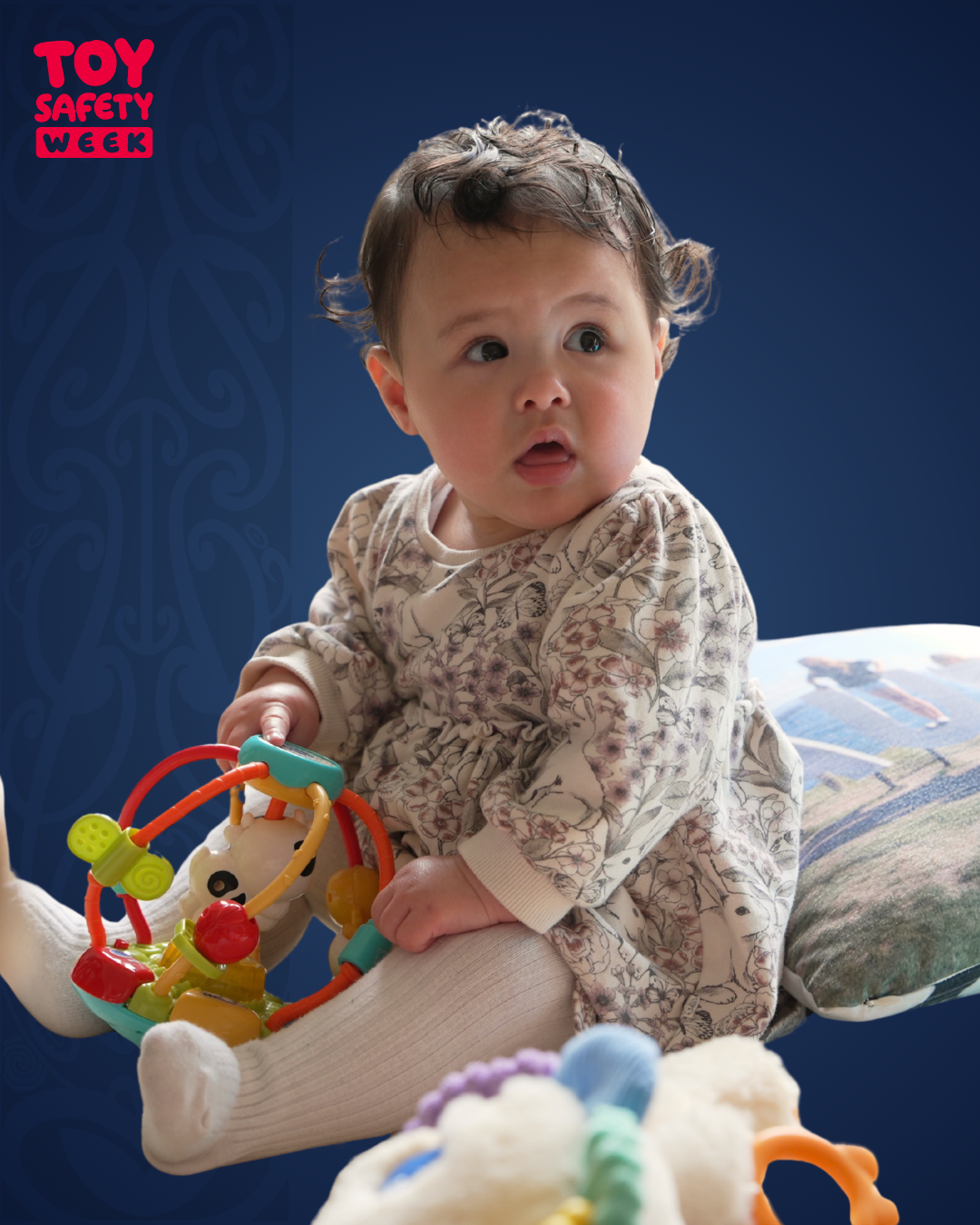
Children under the age of three are curious and use all their senses to learn about the world around them.
They’ll often put things in their mouth, nose, and ears and use toys in ways you don’t expect.
Before buying a toy, think about how it might be used during play.
Before you buy: toy safety checklist
Whether you choose to buy toys brand new or second hand, take a minute to think about safety.
Think about your child’s age and personal development. Check the safety and use instructions – they’ll help you to decide if it’s right for your little one.
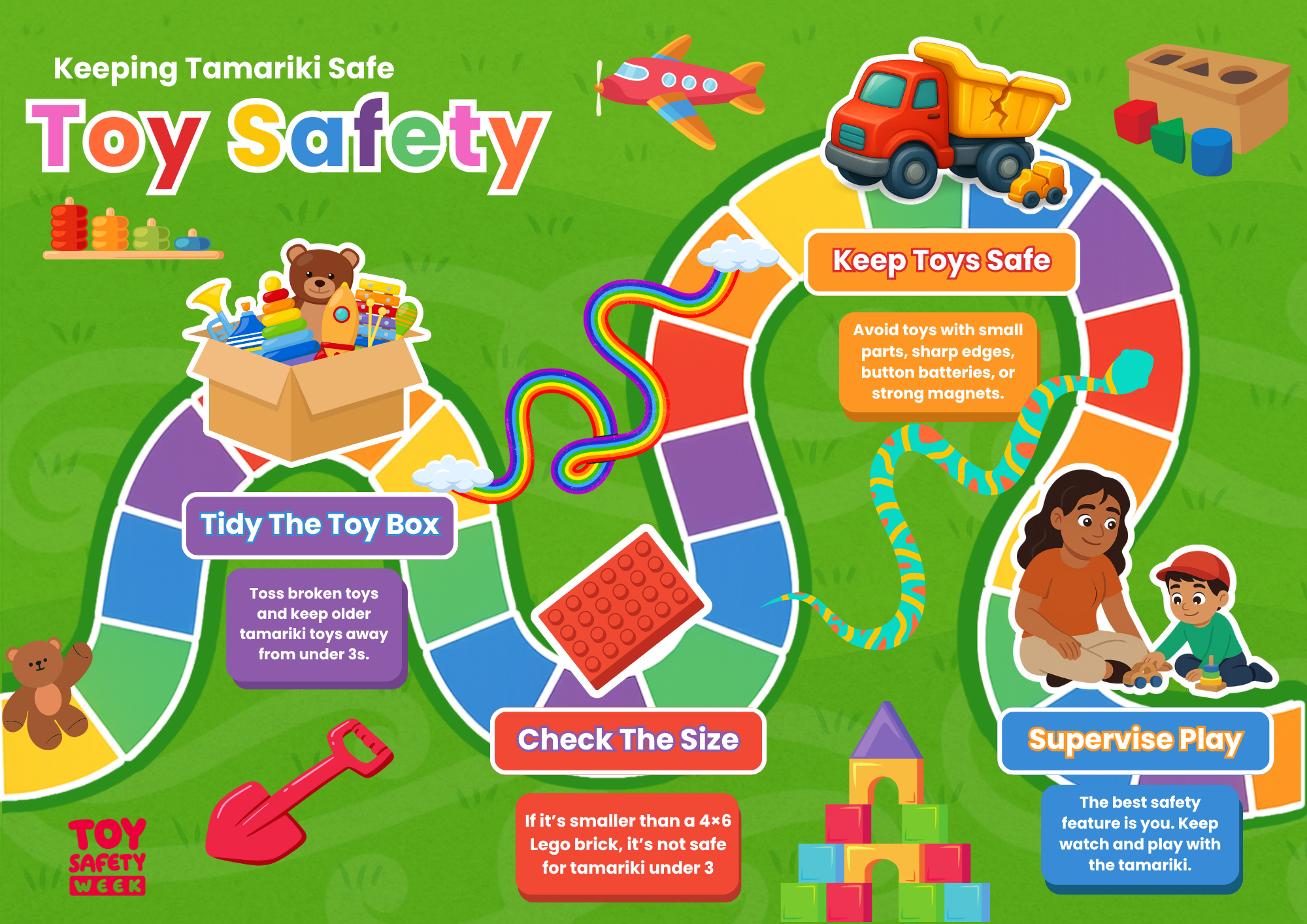
Before buying a toy, and during regular toy-box checks, avoid or dispose of
Small parts that could come loose and be swallowed
Loose screws, weak joints, sharp edges or splinters
Strong magnets that could cause serious internal injuries if swallowed
Damaged toys, including peeling paint, cracked plastic, broken wood or exposed metal
Look for
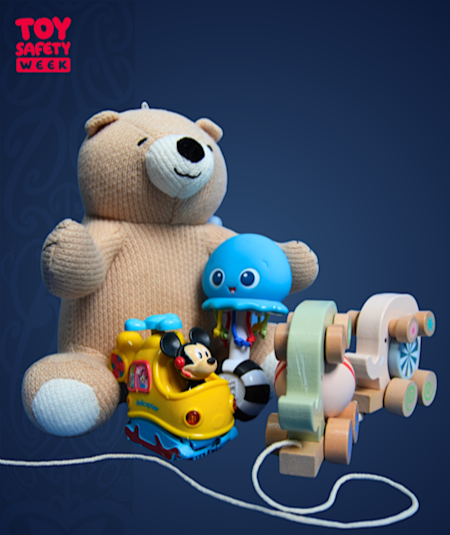
Secure battery compartments that can't be easily opened by children
Soft toys with secure stitching that won't leak stuffing
Safety labels and warnings, including age recommendations
Take extra care with toys that could contain toxic materials or fillings such as
Cuddly stuffed toys
Tactile toys like sand, play doh, slime and squeeze toys (squishies)
Glow sticks and bubble blowing liquids
Art supplies such as crayons, finger paints and marker pens
Making or buying home-made toys? Check that
Small parts are securely attached
Materials are not made of substances that could be harmful
Paints, coatings and finishes do not contain harmful substances such as lead
Regularly check and clean toys. Throw away or replace any toys that are broken, damaged, or no longer safe to use.
Unsafe toy? Act quickly
If your child has swallowed a toy or toy part, is choking, or is having difficulty breathing, seek medical help immediately. Call 111 or go straight to the nearest emergency department.
If it's not an emergency:
Call Healthline on 0800 611 116 for medical advice.
Call the National Poisons Centre on 0800 764 766 for poison-related advice.
You can help reduce harm to other tamariki by reporting the hazard immediately to the business where you purchased the toy. You have the right to a repair, refund, replacement or compensation under the Consumer Guarantees Act.
It’s also good to report your concerns to MBIE’s Product Safety team and the Commerce Commission. Incident and safety reports from the public help government agencies identify, assess and respond to issues.
The following toy safety guides can be downloaded by clicking on the images below: